[Koglist] [CEU Cogsci Talks] TOMORROW: Invitation to workshop on 'Alignment and Social Bonding' // June 7, 9.30 - 12.00

6 Jun
2019
6 Jun
'19
3:50 p.m.
The CEU Department of Cognitive Science and the Social Mind Center cordially invites you
to attend our event:
[cid:image003.jpg@01D51C7F.9AFD3F10]
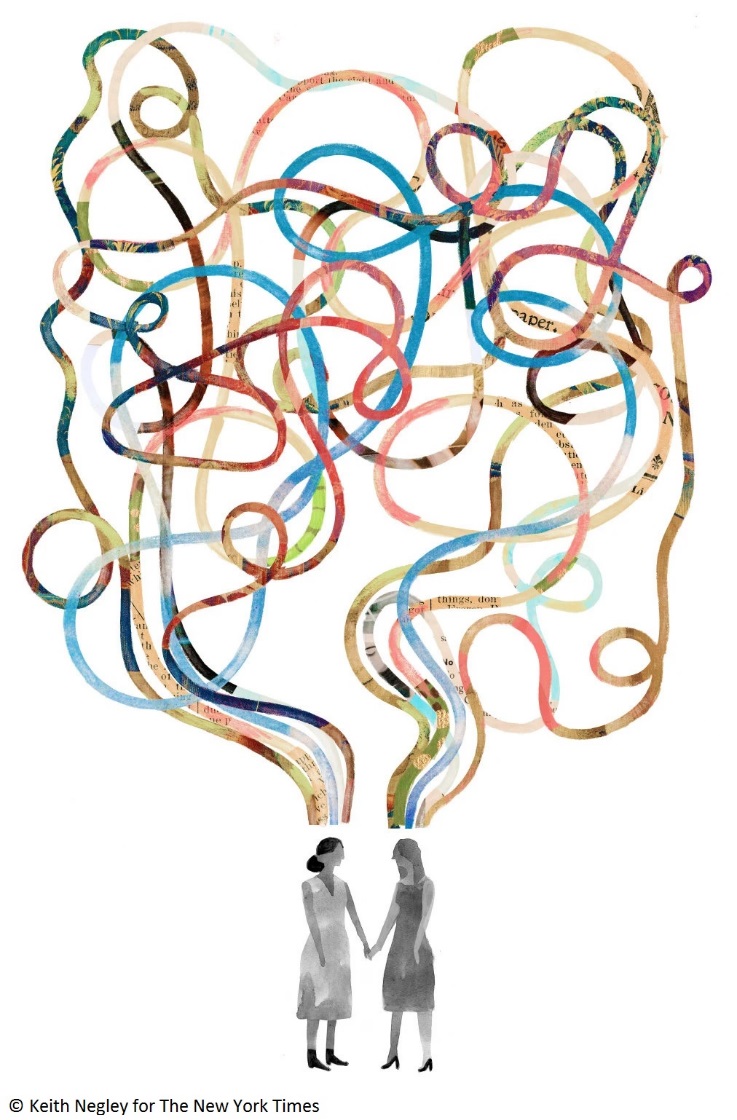
Workshop: Alignment and Social Bonding
Time: Friday, 7th June, 9.30 - 14.00
Place: October Hall, October 6 utca 7, 1051 Budapest
Program:
9.30-10.30 Alignment at different levels during dialogue
Simon Garrod, Institute of Neuroscience and Psychology, University of Glasgow, UK
10.30-11.00 Coffee
11.00-12.00 How we connect: From shared attention to social networks
Thalia Wheatley, Center for Social Brain Sciences, Dartmouth College, US
12.00-13.00 Lunch
13.00-14.00 Molecular imaging of the human social bonding circuit
Lauri Nummenmaa, Turku PET Centre, Finland
***************************************
Talk abstracts
Alignment at different levels during dialogue
(Simon
Garrod<https://www.gla.ac.uk/researchinstitutes/neurosciencepsychology/staff/simongarrod/>,
Institute of Neuroscience and Psychology, University of Glasgow, UK)
Cooperative joint activities such as dialogue present a challenge for monadic cognitive
science, because they involve more than one individual at the same time. This talk will
present a non-monadic Shared Workspace framework for interpreting such activities and show
how it applies to dialogue. The framework captures distributed properties of joint
activities such as alignment of representations and synchronization.
Alignment in dialogue has two dimensions. The first concerns the content of the aligned
representations which can be linguistic or based on dialogue models. Linguistic
representations relate to the sound, meaning and grammar as well as the para linguistic
features of utterances (e.g., gestures). Dialogue models are of two kinds. Interlocutors
have a situation model representing what they are discussing and a game model representing
their current dialogue game - the interactive device (e.g., question plus answer) used to
achieve the current goal of the dialogue (e.g., seeking information from your partner).
The second dimension of alignment concerns time-scale which can be short-term (focal
alignment) or long-term (global alignment). I will argue that global linguistic alignment
is the residue of successive focal alignments based on 'automatic' priming
mechanisms. Similarly, global alignment of situation models reflects successive focal
alignments on situation models. And focal alignment of linguistic representations
contributes to focal alignment of situation models.
The goal of dialogue as a cooperative joint activity is to achieve alignment in relation
to the topic of discussion. Therefore, interlocutors monitor their joint contributions to
the shared workspace for such alignment. In turn, they use the outcome of the monitoring
to produce positive or negative commentaries which help to keep the dialogue on track.
How we connect: From shared attention to social networks
(Thalia Wheatley<https://pbs.dartmouth.edu/people/thalia-wheatley>ey>, Center for
Social Brain Sciences, Dartmouth College, US)
The human brain evolved to be massively interactive with its social environment. A deep
understanding of human thought and behavior will therefore require research that
incorporates the context of others. In this talk I will present behavioral and brain
research from my lab that shows the utility of conversation to align people's mental
models and how this alignment across brains predicts friendship and influence in real
world social networks. I will also highlight recent advances in the field that are
increasingly affording the study of how and why minds connect.
Molecular imaging of the human social bonding circuit
(Lauri Nummenmaa<http://emotion.utu.fi/people/>, Turku PET Centre, Finland)
The endogenous opioid and dopamine systems support appetitive, motivational, and social
behaviour in humans and animals. In this talk I discuss our recent work on mapping the
role of the μ-opioid receptor (MOR) and type 2 dopamine receptor system (D2R) systems in
human social and emotional behaviour using fusion imaging with functional magnetic
resonance imaging (fMRI) and in vivo positron emission tomography (PET) with agonist
radioligands [11C]carfentanil and [11c]raclopride selective for MORs and D2Rs,
respectively. Both activation studies and cross-sectional work show that MORs are
associated with sociability. Social grooming and social laughter modulate central
opioidergic activity, and multiple aspects of prosociality measured by laboratory tasks
and questionnaires are positively associated with MOR expression in the frontal cortex.
Conversely, antisocial traits such as psychopathy are negatively associated with MOR
expression in the limbic system. Finally, MOR (but not D2R) expression is associated with
BOLD-fMRI responses during vicarious pain perception confirming the contribution of MOR
system in empathy. Altogether these results suggest that particularly the opioid system
plays a major role in in human reward processing and sociability. Central opioid release
during social interaction may act as a safety signal, promoting establishment and
maintenance of social relationships. Consequently, malfunction of the opioid system may
predispose individuals to developing disorders involving abnormal hedonic and
socioemotional processing.
______________________________________________
Subscribe by sending an empty mail to talks-subscribe(a)cogsci.ceu.edu
Unsubscribe by sending an empty mail to talks-unsubscribe(a)cogsci.ceu.edu
2531
days inactive
2531
days old
0 comments
1 participants
participants (1)
-
 Andrea Jenei